Criminal Charges?
CALL NOW
CALL NOW





A conviction or sentence in a Tampa Bay area court is not always the last word. In many cases a person has the right to ask a higher court to review what happened. For criminal cases from Hillsborough, Pinellas, Pasco, Manatee, Sarasota and DeSoto counties, that court is generally Florida’s Second District Court of Appeal, often called the Second DCA. Attorney Ron Frey of The Frey Law Firm, LLC, in Tampa handles criminal appeals in this court, and he draws on over 20 years of criminal defense experience.
On January 1, 2023, Florida reorganized its appellate districts and created a new Sixth District Court of Appeal. Since then, the Second DCA hears appeals from three judicial circuits:
Some counties the Second DCA used to cover, including Polk and Lee, now go to the Sixth DCA. If your case started in Hillsborough County or Pinellas County, your appeal will generally be heard by the Second DCA.
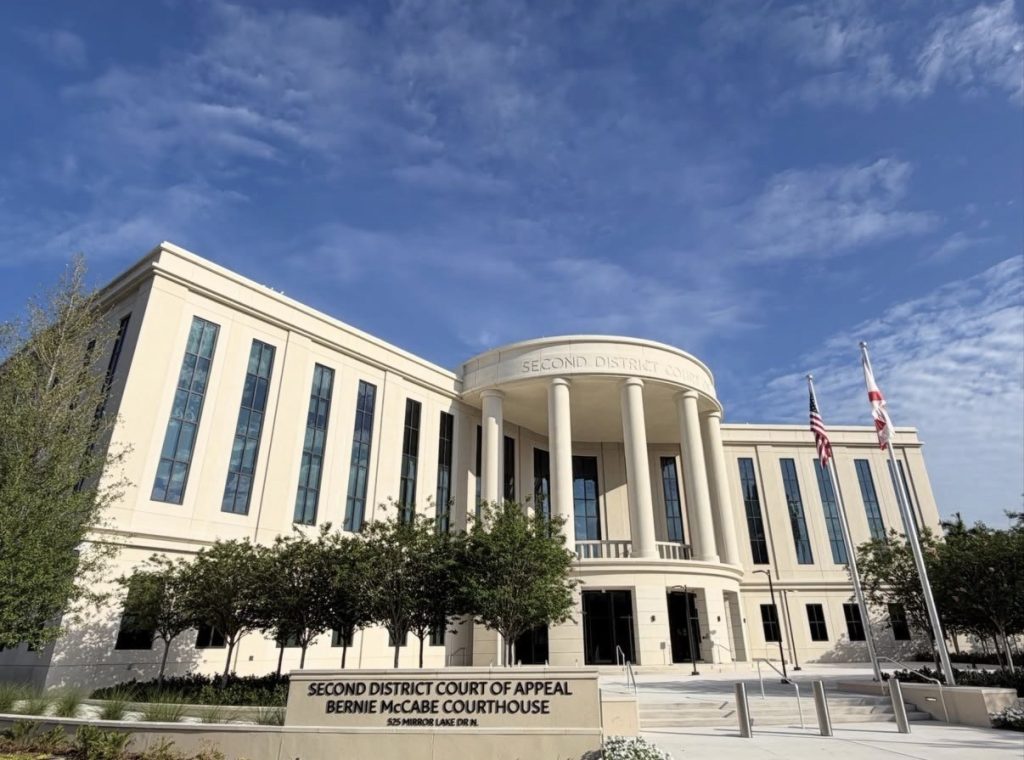
The court was founded in Lakeland in 1956. When the Sixth DCA was created, the Second DCA moved to the Tampa Bay area. Its permanent home is the new Bernie McCabe Courthouse in St. Petersburg, where the court now sits after holding court in Tampa while the building was finished. Most appeals are decided on the written briefs, and filings are made electronically, so you generally won’t need to travel to the courthouse.
An appeal starts with a notice of appeal filed in the trial court. The deadlines for filing an appeal are strict, and if one is missed, the right to appeal may be lost. Time is of the essence, so it’s important to act quickly and secure counsel as soon as possible.
The trial court clerk prepares the record. That means the court file, plus transcripts of the hearings and trial. An appeal is usually limited to what is in that record. The appeals court generally does not hear new witnesses or new evidence.
The person appealing files an initial brief explaining the legal errors claimed. The State, usually through the Office of the Attorney General, files an answer brief. Then a reply brief may follow. Under Rule 9.210 (Briefs), these filings have to meet specific requirements for format and length.
Sometimes the court hears oral argument. Each side gets a short time to answer questions from the judges. Many cases are decided without argument.
Generally, a panel of three judges decides the case, and at least two must agree. The court can affirm the conviction or sentence, reverse it, or send the case back to the trial court for further proceedings. Some decisions come with a full written opinion. Others are short, such as a “per curiam affirmed” decision with no explanation.
After a decision, a party may sometimes file a motion for rehearing or clarification. These also have strict deadlines. Florida Supreme Court review is limited to certain kinds of cases. For most cases, the district court of appeal is the court of last resort.
An appeal does not retry the case. It asks whether legal errors were made, for example in rulings on evidence, jury instructions, motions to suppress, or sentencing, and whether those errors made a difference. Appellate work centers on research and writing, with a close reading of the record. Other forms of review, such as postconviction motions, may also be available in some cases.
Laws and court rules change. Contact Attorney Ron Frey for guidance on your situation.
Appeal deadlines are strict, and time is of the essence. If you or a family member was recently convicted or sentenced, or a trial is coming up, it helps to talk about appellate issues early. Attorney Ron Frey offers a free and confidential consultation. Call or text (813) 775-2276, call or text toll-free at (844) 766-3739, or contact the firm online. The Frey Law Firm, LLC, 625 E Twiggs St, Tampa, FL. You can also learn more about the firm’s criminal defense services.